Google will launch its first AI glasses in 2026, according to a company blog post.
At Google’s I/O event in May, the company announced partnerships with Gentle Monster and Warby Parker to create consumer wearables based on Android XR, the operating system that powers Samsung’s Galaxy XR headset.
But you can’t wear a bulky headset while out in the real world, which makes smart glasses appealing as a less obtrusive smart wearable.
“For AI and XR to be truly helpful, the hardware needs to fit seamlessly into your life and match your personal style,” Google writes. “We want to give you the freedom to choose the right balance of weight, style and immersion for your needs.”
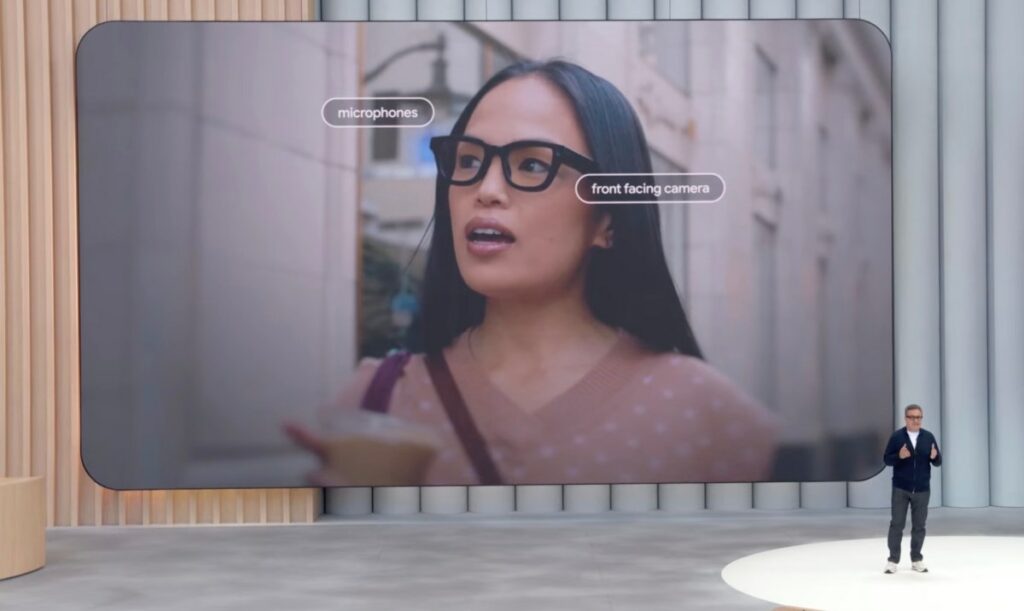
Google is working on various types of AI-powered glasses — one model is designed for screen-free assistance, using built-in speakers, microphones, and cameras to allow the user to communicate with Gemini and take photos. The other model has an in-lens display — which is only visible to the person wearing the glasses — that can show turn-by-turn directions or closed captioning.
Google also shared a preview of the wired XR glasses from Xreal called Project Aura. This model situates itself between a bulky headset and an unobtrusive pair of glasses. Beyond just an in-lens display, the Project Aura glasses can function as an extended workplace or entertainment device, allowing the user to use Google’s suite of products or stream video as they would in a more advanced headset.
While Meta has gotten out to an early lead in smart glasses development, Google now joins Apple and Snap among the companies expected to challenge Meta with their own hardware next year.
Meta’s smart glasses have caught on in part thanks to its partnership with Ray-Ban, and it sells these products in retail stores. Google’s partnership with Warby Parker seems like it will follow a similar strategy, committing $75 million thus far to support the eyewear company’s product development and commercialization costs. If Warby Parker meets certain milestones, Google will commit an additional $75 million and take an equity stake in the brand.